How Fast Does Algae Grow on a Boat Hull in the Summer? The Science of Marine Growth, Bottom Paint, and Hull Cleaning
Boat owners in Florida are often surprised to discover that their hull can begin showing signs of marine growth only days after it has been professionally cleaned. A boat that looked clean when it was serviced may develop a thin green film, brown discoloration, or a layer of soft biological growth shortly afterward. During Florida’s warm summer months, this can happen remarkably quickly, and it is generally a normal consequence of the biological processes occurring in warm coastal waters.
A submerged boat hull is not biologically inert. The moment a vessel enters the water, its underwater surfaces become part of a dynamic marine ecosystem. Microscopic organisms, dissolved organic compounds, bacteria, algae, and other microorganisms interact with the hull surface and begin the process of colonization. Over time, this microscopic activity can develop into visible biofouling, which may eventually include algae, barnacles, hydroids, tunicates, sponges, and other marine organisms.
The speed at which this process occurs depends on a combination of environmental and physical factors. Water temperature, sunlight, nutrient availability, salinity, water circulation, local biological productivity, hull location, vessel movement, and the type and condition of antifouling paint all influence how rapidly marine growth develops. During Florida’s summer season, many of these factors combine to create particularly favorable conditions for rapid fouling.
Understanding the science behind this process helps explain why a boat may begin accumulating algae shortly after a cleaning, why some vessels may require hull cleaning as frequently as every two weeks, and why excessive or overly aggressive cleaning can damage the very bottom paint that is intended to protect the hull.
The Biological Process Begins Almost Immediately
When a boat is placed into the water, the hull surface immediately begins interacting with the surrounding environment. One of the earliest stages of marine biofouling is the formation of what scientists often describe as a conditioning film. Dissolved organic molecules and other compounds present in seawater begin adhering to the submerged surface. This changes the chemical characteristics of the hull and creates conditions that can make microbial attachment easier.
Bacteria and other microorganisms can then attach to the surface and begin forming a biofilm. Biofilms are complex communities of microorganisms embedded within a matrix of extracellular polymeric substances that they produce themselves. This biological matrix helps organisms adhere to surfaces and provides a foundation for the development of more complex fouling communities.
This process can begin within hours to days under favorable conditions.
The early stages of biofouling may not be visible to the human eye, but they represent the beginning of a biological succession that can eventually lead to larger and more recognizable forms of marine growth. Microscopic algae and other photosynthetic organisms can colonize the developing biofilm, particularly in areas where sufficient light penetrates the water column.
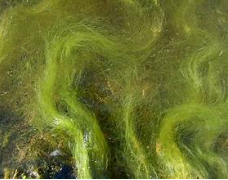
As these organisms reproduce and accumulate, the previously invisible biological layer becomes increasingly noticeable. What a boat owner sees as a thin green or brown coating is often the visible result of a much larger microbial and algal community that has been developing on the surface.
This explains why a hull can begin showing light growth within only a few days of being cleaned. The cleaning process removed the existing fouling, but it did not eliminate the organisms and nutrients naturally present in the surrounding water. As soon as the hull returns to the marine environment, the biological colonization process begins again.
Why Summer Accelerates Marine Growth
Florida’s summer conditions are particularly favorable for biological productivity. Water temperatures rise, daylight hours are long, and sunlight provides energy for photosynthetic organisms. In coastal and estuarine environments such as the Indian River Lagoon and surrounding waterways, nutrient availability can further support the growth of algae and other microorganisms.
Temperature is one of the most important variables influencing biological activity. Within the appropriate physiological range for a particular organism, warmer water generally increases metabolic activity and can accelerate growth and reproduction. This does not mean that every marine organism grows continuously faster as temperature increases, because extreme temperatures can become stressful or lethal. However, during the warm-water season in Florida, temperatures commonly fall within a range that supports high biological activity for many fouling organisms.
Sunlight is also critical for photosynthetic organisms. Algae use light energy to convert carbon dioxide and water into organic compounds through photosynthesis. When sufficient sunlight is available, algae can produce biomass rapidly, particularly when other essential nutrients are not limiting.
Nutrients such as nitrogen and phosphorus can also influence the productivity of aquatic systems. In estuarine environments, nutrient concentrations may vary significantly depending on rainfall, runoff, tidal exchange, freshwater inputs, biological activity, and other environmental factors. When conditions provide sufficient nutrients and light, algal productivity can increase.
Water movement is another important variable. Tidal currents and circulation influence the delivery of nutrients and microorganisms to submerged surfaces. A boat located in a biologically productive area with favorable water exchange may experience a different fouling rate from a vessel located in a more stagnant or nutrient-poor environment.
These variables interact rather than operating independently. A hull in warm, shallow, well-lit, nutrient-rich water may experience significantly faster biological growth than a hull exposed to cooler, deeper, or more frequently flushed water.
Why Growth Can Return Within Days After Cleaning
The appearance of algae shortly after a hull cleaning does not necessarily indicate that the cleaning was ineffective. It is important to distinguish between the removal of existing fouling and the prevention of future fouling.
Hull cleaning removes organisms that are already attached to the vessel. It does not permanently prevent new organisms from encountering and colonizing the hull.
A boat that has just been cleaned is immediately exposed to the same environmental conditions that caused the original growth. Microorganisms, algae, spores, larvae, and organic material are constantly present in natural waters. Once the hull is returned to the water, the colonization process begins again.
The rate of visible regrowth can vary substantially. A boat may develop a light film of algae within a matter of days while remaining otherwise relatively clean. Another boat may accumulate more substantial growth over the same period because of its location, bottom paint condition, water temperature, or local biological productivity.
This is why boat owners should not necessarily expect a hull to remain visually identical to the day it was cleaned. The objective of regular hull maintenance is not to create a permanently sterile surface. Instead, the objective is to control the accumulation of marine growth before it becomes established enough to negatively affect vessel performance or require aggressive removal techniques.
The Difference Between Early-Stage Biofouling and Established Fouling
Marine fouling is a progressive biological process. Early-stage growth is generally softer and easier to remove, while mature fouling communities can become significantly more difficult to manage.
A thin biofilm and soft algae represent relatively early stages of colonization. If this material is removed before more complex organisms become established, the cleaning process can often be performed with less mechanical force.
As time passes, however, additional organisms may settle on the surface. Barnacle larvae, for example, can attach to suitable submerged surfaces and undergo metamorphosis into juvenile barnacles. Other organisms, including hydroids, tunicates, and various sessile invertebrates, may also become established.
The longer these organisms remain attached, the more difficult they can be to remove. Hard calcareous structures produced by organisms such as barnacles can create a much more challenging cleaning situation than soft algae.
This progression is one of the primary reasons that frequent maintenance can be beneficial. Removing early-stage growth before it develops into mature fouling may reduce the need for aggressive scraping or abrasive cleaning later.
Don’t Let a Boat Hull Diver Overclean your Boat Hull
Marine growth is a natural consequence of keeping a boat in the water. During Florida’s warm summer months, the biological processes responsible for marine fouling can occur rapidly, and a hull may begin developing visible algae or biofilm within only a few days after cleaning.
This does not necessarily mean the hull was cleaned incorrectly. It means that the boat has returned to an environment where microorganisms and algae are constantly present and capable of recolonizing submerged surfaces.
During Florida’s summer season, seeing some algae return shortly after a cleaning can be completely normal. The important question is not whether growth returns, because it inevitably will. The important question is how quickly it returns, what type of growth is developing, and whether the cleaning schedule and technique are appropriate for the boat’s specific environment and bottom-paint system.
Regular, properly performed hull cleaning can help prevent early-stage marine growth from developing into heavy fouling, reduce the need for aggressive removal methods, maintain hydrodynamic efficiency, and provide an opportunity to identify underwater maintenance issues before they become more serious. Call us today at (772) 828-1099 to have your boat inspected and cleaned this summer!