Warm Weather=More Growth
If you’ve ever looked at your boat’s bottom in January and then again in July, you’ve probably noticed a dramatic difference. What may have taken months to accumulate during the winter can develop in just a few weeks during the summer. For boat owners along Florida’s Treasure Coast and Space Coast, understanding why this happens can save thousands of dollars in fuel costs, maintenance expenses, and potential damage to your vessel.
Summer Creates the Perfect Storm for Marine Growth
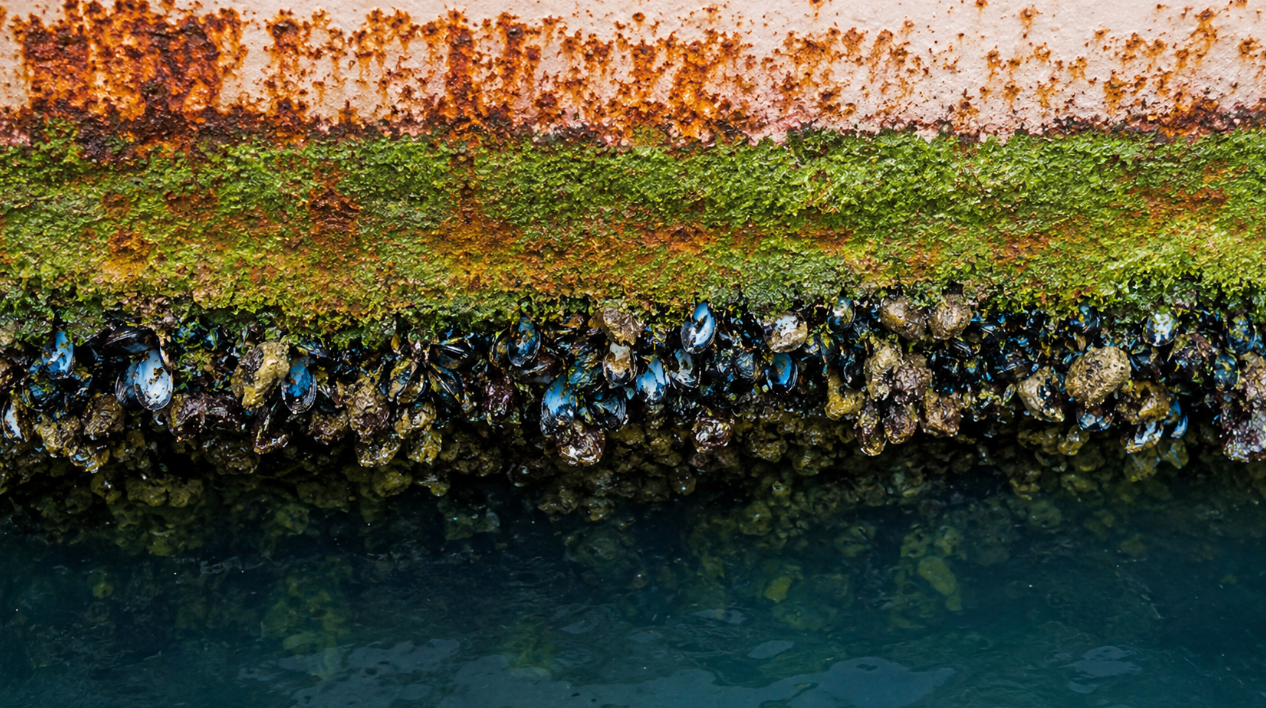
Marine growth is not a single organism. It is an entire ecosystem that develops on your hull. Algae, slime, bacteria, barnacles, tube worms, oysters, and other marine organisms are constantly looking for surfaces to colonize.
During the summer months, East Coast Florida waters become an ideal environment for these organisms due to three major factors.
Warmer Water Accelerates Biological Activity
Most marine organisms experience increased metabolic activity as water temperatures rise. During summer, water temperatures in areas like Fort Pierce, Vero Beach, Sebastian, and Melbourne often reach the mid-80s.
These warmer temperatures speed up growth rates, reproduction cycles, and larval development. Organisms that may grow slowly during cooler months can rapidly establish colonies when temperatures climb.
Think of it like a garden. Plants grow much faster during warm growing seasons than they do during winter. The same principle applies underwater.
Longer Days Mean More Sunlight
Summer brings longer daylight hours and more intense sunlight. This creates ideal conditions for algae and other photosynthetic organisms.
The thin layer of slime that first develops on a hull may seem insignificant, but it acts as the foundation for more complex growth. Once that biofilm establishes itself, it becomes easier for larger organisms such as barnacles and tube worms to attach.
Many boat owners are surprised to learn that the slimy coating they see is often the first stage of a much larger marine growth problem.
Increased Nutrients in Coastal Waters
Summer rains play a major role in marine growth along Florida’s east coast.
Heavy rainfall washes nutrients from the land into rivers, canals, and the Indian River Lagoon. These nutrients act as fertilizer for algae and microorganisms.
Combined with warm temperatures and abundant sunlight, nutrient-rich water creates explosive growth conditions.
Why Boats Sitting at the Dock Grow the Fastest
Many boat owners assume using their boat less will keep it cleaner. In reality, the opposite is often true.
A boat that remains stationary in a marina or on a mooring ball provides a stable surface for organisms to settle and grow. Without regular movement through the water, marine growth can establish itself more easily.
Barnacle larvae are constantly drifting through Florida waters. When they find a suitable surface, they attach permanently and begin building their hard calcium shells.
A boat that sits untouched for weeks during the summer becomes prime real estate for marine growth.
The Hidden Cost of Waiting Too Long
Many boat owners schedule hull cleaning every two or three months during cooler seasons and assume the same schedule works year-round.
Unfortunately, summer growth can quickly turn a routine cleaning into a much more aggressive restoration.
Even a thin layer of slime can increase drag significantly. As growth accumulates, fuel consumption rises because engines must work harder to maintain the same speed.
Barnacles create even greater problems. Their hard shells disrupt water flow across the hull and can damage bottom paint if allowed to become heavily established.
The longer growth remains on the hull, the more difficult it becomes to remove without impacting the protective coating underneath.
Bottom Paint Is Not a Magic Shield
Many boat owners believe fresh bottom paint eliminates the need for regular hull cleaning.
Antifouling paint helps slow marine growth, but it does not stop it completely.
Even premium bottom paints gradually lose effectiveness as slime and marine organisms accumulate. Regular cleaning helps the paint function as intended by exposing fresh biocide layers and preventing excessive buildup.
Think of bottom paint as a tool rather than a complete solution. It works best when paired with a consistent underwater maintenance schedule.
Recommended Summer Cleaning Intervals
Every vessel is different, but most boats on Florida’s east coast benefit from increased cleaning frequency during summer.
A professional hull diver can evaluate your specific location and recommend a maintenance schedule based on actual growth patterns.
Protecting Performance, Fuel Economy, and Paint
Regular summer hull cleaning is about much more than appearance.
A clean hull helps maintain fuel efficiency, protects bottom paint, improves vessel performance, reduces strain on engines, and prevents small growth issues from becoming expensive problems.
For boat owners throughout Fort Pierce, Vero Beach, Sebastian, Melbourne, and the surrounding Treasure Coast and Space Coast communities, summer is the season when underwater maintenance matters most.
The ocean never stops growing things. Staying ahead of marine growth is always easier, less expensive, and better for your boat than waiting until the hull becomes heavily fouled.
When it comes to Florida summers, the best strategy is simple: clean early, clean regularly, and keep your boat performing the way it was designed to.