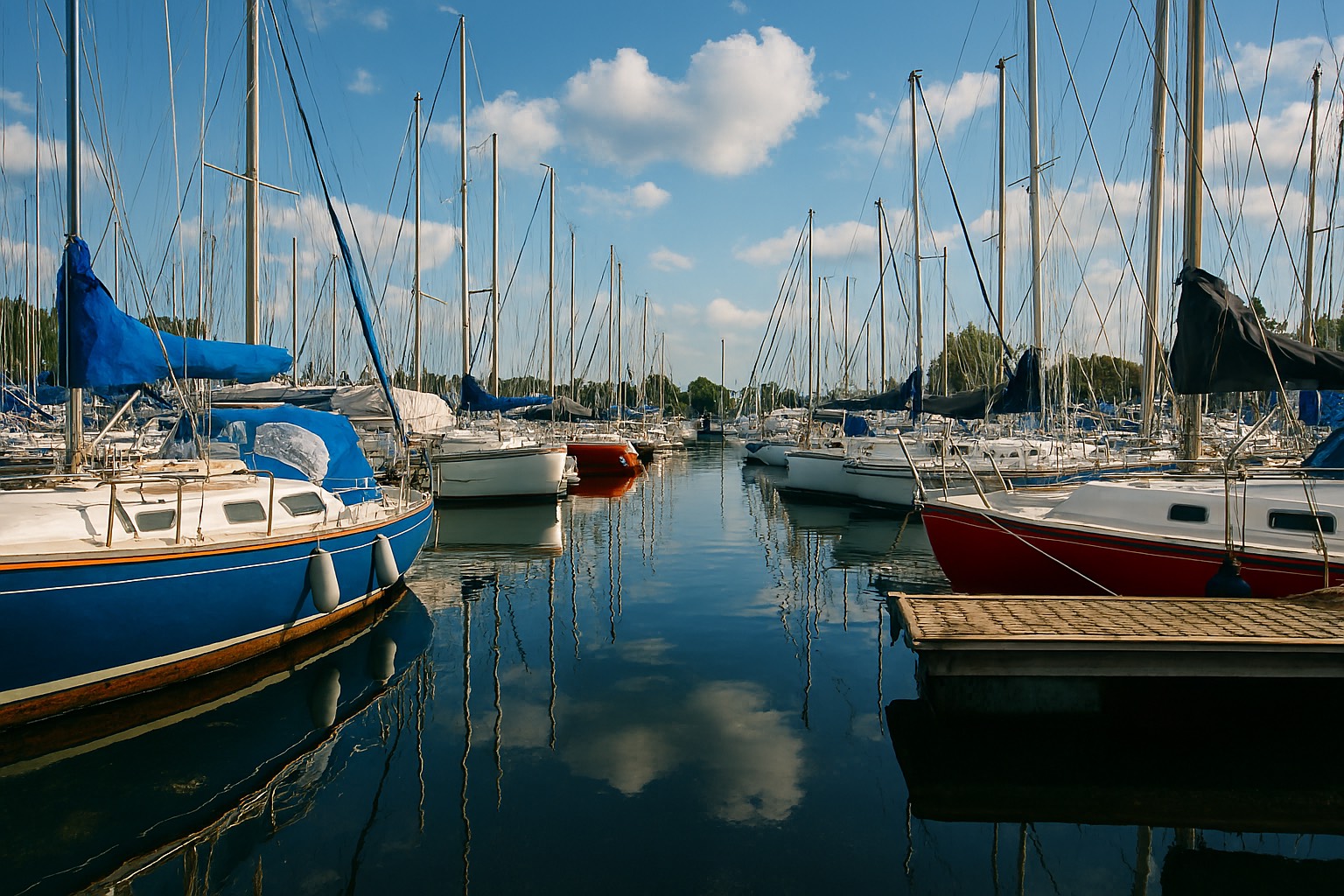
The Science Behind Marine Growth on Idle Boats
Marine biofouling, i.e., the accumulation of organisms such as algae, barnacles, and tunicates, is a natural but costly process. It happens in stages, and when your boat doesn’t move, each stage accelerates.
- Microbial Film Formation (Within Days):
The first step is the invisible layer of bacteria and organic compounds that forms on the hull. This “biofilm” provides the perfect surface for algae and larvae to attach. - Algal Growth (1–2 Weeks):
In warm, nutrient-rich marina water, especially in Florida’s Indian River Lagoon , microalgae begin to colonize the film. This creates a slippery green or brown layer that increases drag and attracts larger species. - Barnacle and Invertebrate Settlement (2–4 Weeks):
Barnacle larvae, oyster spat, and tube worms detect chemical cues from the biofilm and permanently attach themselves. Once cemented, they can’t be removed without physical cleaning. - Mature Fouling Community (1–3 Months):
Within a few months, a stationary hull can support an entire mini-ecosystem: sea squirts, hydroids, and even small crabs. The drag increase from this growth can exceed 30%, drastically reducing fuel efficiency.
Why Florida Marinas Accelerate Growth
Florida’s east coast waters, including from Melbourne to Stuart, create ideal conditions for fouling organisms:
| Environmental Factor | Effect on Growth |
|---|---|
| Warm Temperatures (75°F–90°F) | Promotes rapid larval development and algae blooms year-round. |
| Nutrient-Rich Brackish Water | High nutrient loads from runoff feed algae and biofilm formation. |
| Low Water Flow in Marinas | Stagnant conditions allow larvae to settle rather than being swept away. |
| Boat Traffic & Structures | Piers, pilings, and hulls provide surfaces for fouling organisms to spread. |
A stationary boat in these conditions becomes a magnet for larvae and spores, essentially acting as a floating reef.
Movement Is the Best Anti-Fouling
A moving hull creates shear forces that disrupt early growth stages. Even moderate movement helps reduce attachment rates by removing soft slime and preventing larval settlement.
However, once a boat is left idle, particularly in warm, calm marina water, these natural cleansing forces disappear. Studies have shown:
- Boats stationary for 2–3 weeks show measurable slime buildup, and even the beginning of barnacle growth.
- After 4–6 weeks, barnacle settlement typically begins, this happens significantly earlier depending on variables such as condition of bottom paint, the temperature of the water, and location of the marina.
- Beyond 8 weeks, hard fouling is well established and can permanently damage paint, again this can occur much sooner if bottom paint is old or the water temperature is warm.
Optimal Hull Cleaning Frequency for Stationary Boats
How often should you clean your boat if it’s mostly sitting in a marina? The answer depends on water temperature, salinity, and your hull’s antifouling coating — but in Florida, here’s a reliable guideline:
| Boat Use Pattern | Recommended Hull Cleaning Frequency |
|---|---|
| Active Cruiser (Weekly use) | Every 6–8 weeks |
| Weekend Boater (Monthly use) | Every 4–6 weeks |
| Mostly Idle / Moored in Marina | Every 3–4 weeks |
| Liveaboard / Docked Full-Time | Every 2–3 weeks during summer |
Tip: Even if your boat rarely leaves the slip, having a diver perform routine underwater hull cleaning keeps your antifouling paint effective and prevents permanent damage from barnacle encrustation.
A Call to Action
When left idle in Florida’s warm, sheltered marinas, even high-end antifouling paint can’t stop nature’s pace. The solution isn’t just to clean more often, it’s to clean smarter.
Scheduling regular underwater hull cleaning through a professional service keeps your vessel efficient, protects your paint investment, and ensures you’re ready to go at a moment’s notice, without fighting through barnacles and drag.
For reliable, insured, and eco-conscious hull cleaning across Fort Pierce, Vero Beach, and Melbourne and the surrounding areas, contact Sunstate Marine Services at (772) 828-1099.
Veteran Owned. Diver Driven. Sea the Difference.