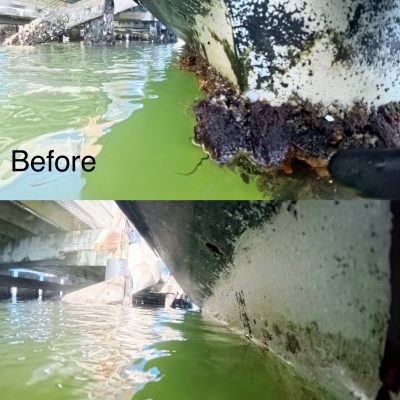
In the waters around Sebastian, Vero Beach, and Fort Pierce, Florida, propellers take a beating. Brackish water, shifting sandbars, and rapid marine growth can all contribute to damage, inefficiency, and costly mechanical strain. At Sunstate Marine Services, we specialize in underwater propeller inspections, removals, and replacements, keeping your boat running smoothly without the hassle of a haul-out.
Here are some the most common signs it’s time to have your propeller inspected, repaired, or replaced:
Reduced Top Speed
If your boat once reached its top speed with ease but now struggles to maintain performance without any changes in load or water conditions, you could be losing efficiency through a damaged or warped propeller. Even small bends or nicks change how water flows over the blades, creating drag.
A loss in top-end speed is one of the first signs boaters notice, but it’s often ignored until performance drops dramatically. If you operate in saltwater, check for corrosion or pitting on the propeller from worn anodes, which can eat away at blade surfaces and cause speed loss.
Frequent Anode Wear
If your zinc or aluminum anodes are burning away faster than usual, it could be a sign your propeller is acting as a primary target for electrolysis. This means it’s already corroding and likely needs attention. Replacing worn anodes and addressing any prop damage together can prevent repeat issues.
Visible Blade Damage
Run your hand (carefully) along the blade edges. Look for:
- Nicks or gouges from debris strikes
- Bent blades from grounding
- Pitting or corrosion from electrolysis
- Cracks near the hub or tips
While small nicks can sometimes be repaired, deep cracks or heavy corrosion mean the metal’s strength is compromised, making propeller replacement the safer choice.
Engine Over-Revving (or Struggling to Reach RPMs)
If your engine is revving higher than normal but speed isn’t increasing, your propeller may be cavitating, slipping, or suffering hub failure, and it is time for propeller maintenance. The opposite is also true–if you can’t reach normal RPMs, your prop may be bent, too large for the conditions, or heavily fouled. Both scenarios put your engine at risk for long-term wear, and merit an underwater propeller inspection.
Unusual Vibration or Shuddering
A properly balanced propeller should run smoothly, even at high speeds. If you feel new vibrations in the helm or deck, it’s a red flag. Damage as minor as one bent blade can throw off balance, creating vibration that wears down seals, bearings, and the lower unit over time.
Slower Acceleration
When your boat feels “sluggish” getting on plane, the culprit is often prop damage. Chips, cracks, or bent edges reduce the bite your prop gets in the water, meaning more engine revs but less forward push.
Acceleration loss can also result from hub slippage, which is a condition where the rubber inside the propeller hub spins independently of the blades. This requires immediate attention to avoid being stranded.
Higher Fuel Consumption
When your propeller is damaged, your engine has to work harder to achieve the same performance. This extra strain shows up at the fuel dock. If you’re burning noticeably more fuel on the same runs, it’s time for a prop and anode inspection to rule out drag from corrosion or barnacle growth.
If you haven’t already, read our FAQs on Hull Cleaning—since growth on your prop can mimic damage symptoms.
Whether you’re in Sebastian, Vero Beach, Fort Pierce, or anywhere between Daytona and Stuart, Florida Sunstate Marine delivers professional propeller inspections, removals, and replacements, all done underwater to save you time and haul-out costs. Call or text us today at 772-828-1099 if you need a propeller removal or replacement.