The Difference Between Early-Stage Biofouling and Established Fouling
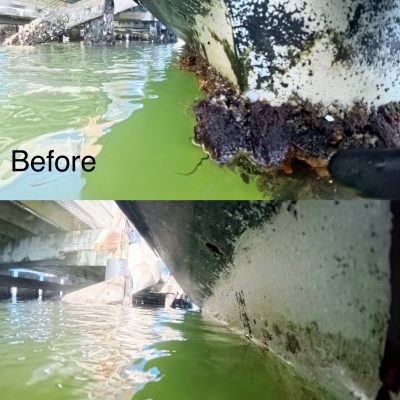
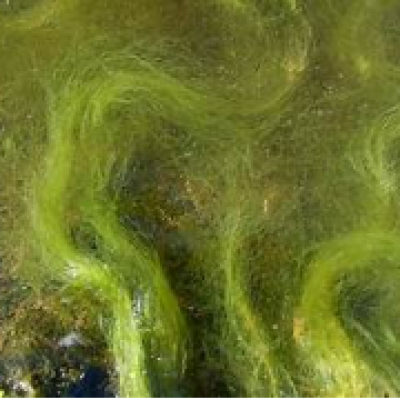
Marine fouling is a progressive biological process. Early-stage growth is generally softer and easier to remove, while mature fouling communities can become significantly more difficult to manage. A thin biofilm and soft algae represent relatively early stages of colonization. If this material is removed before more complex organisms become established, the cleaning process can often be performed with less mechanical force.
As time passes, however, additional organisms may settle on the surface. Barnacle larvae, for example, can attach to suitable submerged surfaces and undergo metamorphosis into juvenile barnacles. Other organisms, including hydroids, tunicates, and various sessile invertebrates, may also become established.
The longer these organisms remain attached, the more difficult they can be to remove. Hard calcareous structures produced by organisms such as barnacles can create a much more challenging cleaning situation than soft algae. This progression is one of the primary reasons that frequent maintenance can be beneficial. Removing early-stage growth before it develops into mature fouling may reduce the need for aggressive scraping or abrasive cleaning later.
Why Some Boats May Need Cleaning Every Two Weeks
There is no universal hull-cleaning schedule that applies to every boat. The appropriate interval depends on the individual vessel and the environment in which it is kept.
During periods of intense summer growth, some boats may require professional cleaning as frequently as every two weeks. This can be particularly relevant for vessels located in warm, nutrient-rich, biologically productive waters or boats with a history of rapid fouling. A boat with older or deteriorating paint may also accumulate marine growth more rapidly.
A two-week interval may seem excessive to some boat owners, but in certain environments it can be a practical maintenance strategy. The purpose is not necessarily to remove heavy fouling every fourteen days. Instead, frequent maintenance can prevent a heavy fouling community from becoming established in the first place.
For example, a boat that develops a thin layer of soft algae within several days may still be relatively easy to maintain after two weeks. If the same boat is left for six or eight weeks during peak summer conditions, the amount and type of fouling may be substantially different. The growth may become thicker, more firmly attached, and more biologically diverse.
The difference is important because the cleaning method required to remove a thin layer of soft growth may be significantly less aggressive than the methods required to remove mature barnacles or other hard fouling.
For boats with very rapid growth, a two-week cleaning schedule may therefore help maintain the hull with less mechanical intervention per cleaning. For boats with slower growth, a monthly schedule may be adequate. The correct interval should be determined by observing the actual fouling rate rather than relying exclusively on a predetermined calendar.
Monthly Cleaning May Be Appropriate for Many Boats
For many vessels operating in Florida, monthly hull cleaning provides a reasonable balance between controlling marine growth and limiting unnecessary mechanical wear on the bottom coating.
A four-week interval allows boat owners to address early-stage fouling before it becomes heavily established. It can also provide an opportunity for routine underwater observation of the hull, running gear, anodes, through-hull fittings, and other underwater components.
The condition of the hull should be evaluated over time. If a boat is consistently showing significant growth after only two weeks, waiting an additional two weeks may allow the fouling to become substantially more difficult to remove. Conversely, if a boat remains relatively clean after four weeks, unnecessarily aggressive cleaning may provide little benefit while still contributing to coating wear.
The ideal maintenance interval is therefore a balance between the rate of biological growth and the rate at which the cleaning process affects the protective coating.
Why More Cleaning Is Not Always Better
One of the most important considerations in professional hull maintenance is recognizing that cleaning itself can affect the bottom paint.
Antifouling paint is designed to protect underwater surfaces from marine fouling, but it is not an infinitely durable barrier. Different coatings have different physical and chemical properties, and each system has a finite service life.
Ablative antifouling paints are specifically designed to wear gradually over time. Their antifouling performance is associated with the gradual release or exposure of active ingredients at the coating’s surface.
Mechanical abrasion can accelerate the loss of this material. If an ablative coating is aggressively scrubbed or scraped during every cleaning, the cleaning process may remove more coating than necessary. Over time, this can reduce the effective thickness of the paint system and potentially shorten the period before the vessel requires repainting. This creates an important distinction between frequent maintenance and aggressive cleaning.
A boat with bottom paint may benefit from frequent cleaning if that cleaning is performed gently and appropriately for the condition of the hull. However, frequent cleaning performed with excessive force or abrasive techniques may cause unnecessary coating loss. The goal should therefore be to remove marine growth while minimizing unnecessary disturbance of the underlying antifouling system.
The Cost of Waiting Too Long
While overcleaning can contribute to premature paint loss, allowing marine growth to accumulate unchecked can create a different set of problems.
As fouling develops, the hull’s surface becomes increasingly rough. This increases frictional resistance as water moves across the hull. The exact performance penalty varies depending on the type and extent of fouling, but heavy biological growth can negatively affect hydrodynamic efficiency. For powerboats, increased resistance may contribute to reduced speed and increased fuel consumption. For sailboats, fouling can negatively affect speed and maneuverability.
Established marine growth can also make cleaning more difficult. Mature barnacles and other hard fouling organisms may require greater mechanical effort to remove than soft algae or early-stage biofilm.
This creates a maintenance balance that is important for boat owners to understand. Cleaning too aggressively or unnecessarily often can accelerate bottom-paint wear, while waiting too long can allow fouling to become established and require more aggressive cleaning later. The best strategy is generally consistent maintenance at an interval appropriate for the vessel’s actual growth rate.
A Science-Based Approach to Summer Hull Cleaning
For Florida boat owners, a practical summer maintenance schedule should be based on observation rather than a rigid one-size-fits-all rule.
A vessel experiencing rapid summer fouling may require cleaning every two weeks. A boat with moderate growth may be adequately maintained with monthly service. The appropriate interval may also change throughout the year as water temperature, sunlight, nutrient availability, and biological productivity change.
The key is to monitor the boat’s actual fouling progression.
If significant algae or other soft growth is appearing within two weeks, that may indicate that the vessel would benefit from a shorter maintenance interval. If the hull remains relatively clean after a month, a longer interval may be reasonable.
The goal is to intervene before growth becomes heavily established while avoiding unnecessary mechanical wear on the antifouling coating.
The Bottom Line: The Goal Is Controlled Growth, Not a Sterile Hull
The most effective maintenance strategy is to control this growth before it becomes heavily established. Depending on the vessel and its environment, that may mean professional hull cleaning every two weeks, every four weeks, or at another interval determined by the boat’s actual rate of fouling.
The objective of professional hull maintenance should be balance. The hull should be kept clean enough to minimize excessive biological fouling and maintain efficient performance, while the cleaning process should be carefully controlled to preserve the bottom coating for as long as possible.
Regular, properly performed hull cleaning can help prevent early-stage marine growth from developing into heavy fouling, reduce the need for aggressive removal methods, maintain hydrodynamic efficiency, and provide an opportunity to identify underwater maintenance issues before they become more serious.
The science of hull maintenance is ultimately a matter of timing and balance: clean often enough to prevent marine growth from becoming established, but carefully enough to avoid unnecessarily removing the protective coating designed to keep that growth under control.
At Sunstate Marine Services, we believe effective hull maintenance is about more than simply making a boat look clean on the day it is serviced. It is about understanding the biological environment in which the vessel operates, recognizing how quickly marine growth can develop, and using appropriate cleaning techniques that balance fouling control with preservation of the boat’s bottom paint. Call or text us today at (772) 828-1099 to set up your summer boat hull cleaning schedule.