Barnacles Harden after a Boat is Pulled, Sometimes causing Lasting Damages
For many boat owners, haul-out day feels like the right time to deal with whatever has built up below the waterline. The boat comes out, the yard pressure washes it, and the maintenance begins. But by the time your boat is hanging in the slings, some of the damage may already be underway.
The biggest culprit is often dried marine growth, especially barnacles.
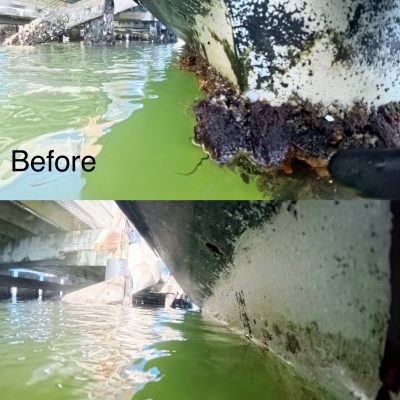
When barnacles are alive and submerged, they can usually be removed cleanly by a professional diver. Once they are exposed to air, they harden dramatically. Their shells become dense and cement-like, bonding more aggressively to the hull and underwater metals. What could have been a straightforward underwater cleaning often becomes a much harsher removal process, sometimes involving aggressive pressure washing. That extra force is where the real damage begins.
How Allowing Barnacles to Dry is Problematic for Different Boat Bottom Types
For painted bottoms, dried barnacles can tear away more than just growth. When hard growth is mechanically removed after haul-out, it often lifts patches of bottom paint with it. Even small areas of paint loss expose the layers beneath, shortening the lifespan of your antifouling coating and creating weak points where new marine growth can establish faster. What could have been a simple touch-up can quickly become an expensive repaint.
For fiberglass hulls, especially unpainted gelcoat bottoms, the risk is different but just as serious. Barnacles attach by secreting a natural adhesive that bonds tightly to the surface. Once dried, removing them can chip or gouge the gelcoat itself. That leaves permanent pitting, surface scars, and roughness that not only looks bad but increases drag in the water. Over time, damaged gelcoat can also become more susceptible to staining and moisture intrusion.
For metal hulls and underwater metals, the danger becomes even more technical. Boats with aluminum, steel, bronze, or stainless components can experience localized corrosion beneath heavy marine growth. Barnacles trap moisture and create tiny micro-environments where oxygen levels change, accelerating corrosion in concentrated spots. On aluminum hulls especially, neglected growth can contribute to pitting that is far more expensive to repair than routine cleaning. Props, shafts, trim tabs, and Bow Thruster tunnels are common problem areas.
How Sunstate Marine Can Protect your Boat Hull
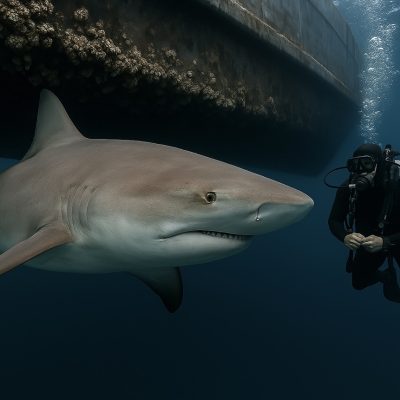
A professional pre-haul cleaning removes heavy growth while it is still wet, softer, and easier to detach safely. That means less scraping by the yard, less aggressive pressure washing, and less risk of damaging the surfaces you are trying to protect. It also gives your mechanic, surveyor, or boatyard a clean view of the hull so they can inspect what actually matters instead of fighting through layers of marine buildup.
It also protects your running gear. A diver can inspect your Propeller, shaft, rudder, and Sacrificial Anodes before haul-out and often catch issues like missing zincs, fishing line wrapped on shafts, or early corrosion before they become bigger problems.
The ideal time for a pre-haul hull dive is usually 24 to 72 hours before your scheduled haul-out. That gives you the benefit of a clean hull without allowing new growth to return.
At Sunstate Marine Services, we regularly perform pre-haul hull cleaning and underwater inspections for vessels throughout the Treasure Coast. Whether your boat is headed to the yard for bottom paint, dry storage, a survey, or seasonal maintenance, cleaning it underwater first helps protect your investment and often saves money in the process.
Before you pull your boat out of the water, clean what is underneath first.
Call Sunstate Marine Services at 772-828-1099 or email [email protected] to schedule professional hull cleaning, underwater inspection, and pre-haul dive services.